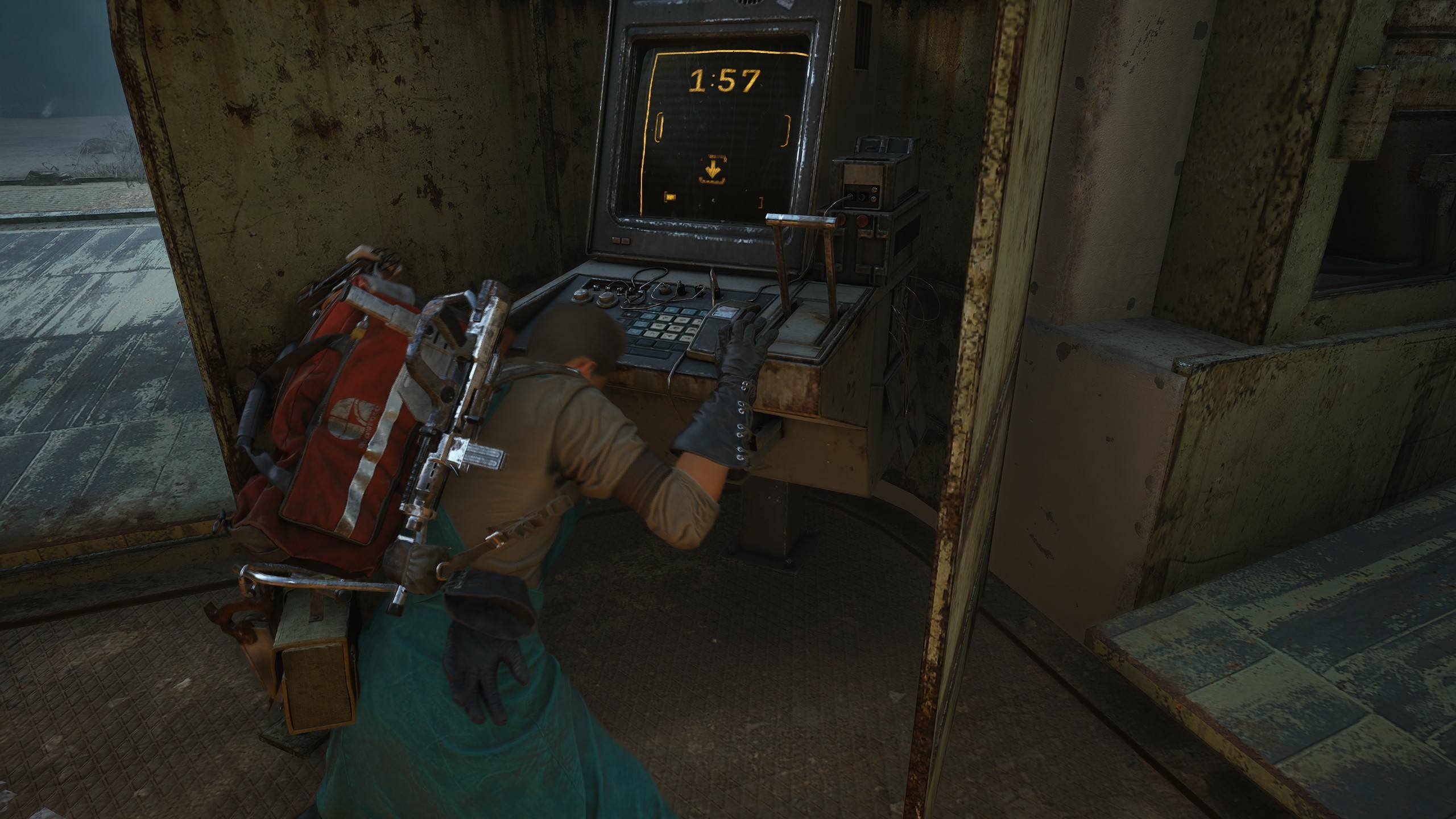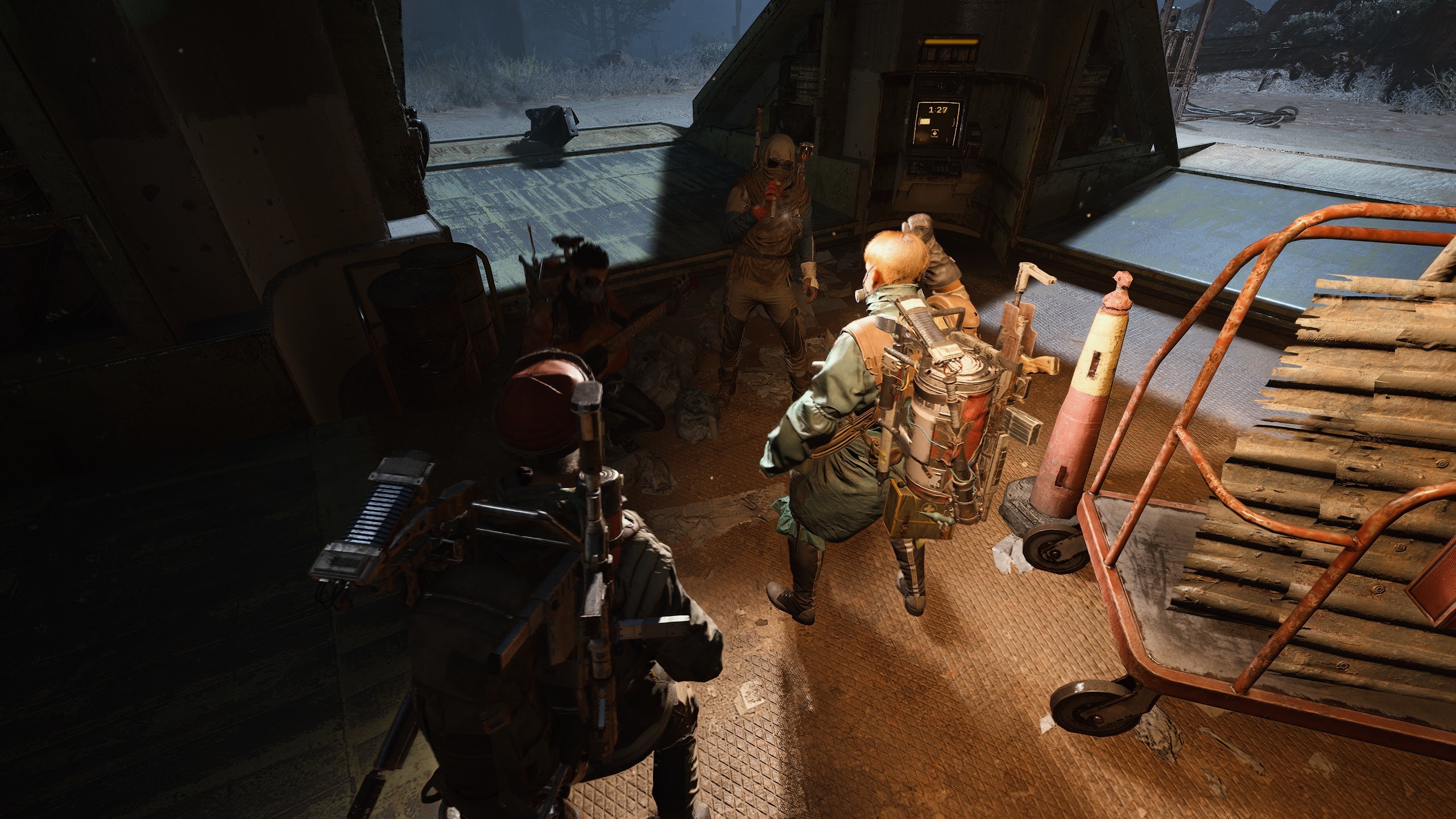

Prospectors stranded on the surface often perceive their primary struggle as one of immediate survival against hostile fauna and environmental hazards. This is a dangerously myopic view that prioritizes short-term tactical encounters over long-term strategic viability. The true conflict, the meta-objective that governs every decision from a single footstep to a full-scale expedition, is the battle against Orbital Decay. The finite, dwindling supply of starship components—from basic hull plating to irreplaceable FTL drive capacitors—is not a background element; it is the central economic and strategic driver that dictates the success or failure of every ground-level operation.
This treatise will examine how the macro-level reality of component scarcity directly informs and constrains micro-level tactical decisions, proving that long-term strategic success is measured in salvaged micro-actuators and preserved system integrity, not just stockpiled ammunition or ore.
The Principle of Resource-Weighted Risk Assessment
Every excursion from the relative safety of the hab carries an implicit cost, measured not in fuel or rations, but in potential ship-part attrition. A rover’s suspension damaged by rough terrain, a shield generator depleted by unexpected combat, a mining laser fried by a power surge—all require repairs that consume parts from a non-renewable, irreplaceable pool. Therefore, every mission plan and in-field action must be subjected to a rigorous Resource-Weighted Risk Assessment.
Is the potential ore yield from a high-threat cave system worth the near-certainty of expending three irreplaceable armor patches to repair rover damage? Effective prospectors operate not as bold adventurers, but as ruthless accountants. They measure objectives by their Component Return on Investment (CROI). A low-yield, low-risk scavenging run that nets a single, critical servo-motor is strategically superior to a high-yield mining operation that costs two servos in wear-and-tear. This is the brutal, unforgiving calculus of a closed system.
Scarcity Tiers and Strategic Prioritization
Not all components are created equal. A deep, functional understanding of the Scarcity Tiers is fundamental to long-term planning and survival. This hierarchical classification governs all strategic priorities.
- Tier 1 (Common/Fabricable): Basic structural plating, wiring looms, standard seals, filtration units. These are consumed regularly for routine maintenance but can often be fabricated from local materials, albeit inefficiently. Their availability dictates the operational tempo and the frequency of routine excursions.
- Tier 2 (Rare/Salvage-Only): Power conduits, focusing lenses, hydraulic actuators, navigation sensors. These complex parts cannot be fabricated with on-site equipment and can only be sourced from derelict ships, ancient crash sites, or pre-existing planetary installations. The hunt for Tier 2 components often defines mid-game objectives.
- Tier 3 (Unique/Irreplaceable): FTL core components, AI cogitators, atmospheric processor regulators, Gellar field emitters. These are the crown jewels of starship technology. The loss or expenditure of a Tier 3 component represents a permanent, catastrophic setback, potentially rendering the escape objective impossible. All strategic planning must be oriented around the preservation and acquisition of these items.
A prospector’s entire ground strategy shifts based on their most pressing scarcity. A shortage of Tier 1 plating forces conservative, short-range missions. A quest for a Tier 3 cogitator justifies a high-risk, long-duration expedition into uncharted territory, as the potential reward outweighs almost any conventional risk.
Tool Degradation as a Strategic Clock
In this scarcity-driven environment, tool and vehicle health are not just health bars; they are countdown timers representing the inexorable march toward component failure. Every use of a plasma cutter, every kilometer driven in a rover, every cycle of the hab’s life support inflicts micro-damage that eventually requires a component expenditure. This concept, Strategic Attrition, is the ever-present force pushing prospectors to act while simultaneously punishing inefficiency.

This transforms equipment choice from a matter of preference to a critical strategic decision. Is it better to use the high-efficiency, but fragile, advanced mining laser on a common iron deposit, risking damage that requires a rare focusing lens to repair? Or is it more prudent to use the slower, more durable standard-issue tool, preserving the advanced equipment for a truly vital resource node? This decision-making process—balancing efficiency against component preservation—is where missions are truly won or lost long before the first alien creature is even sighted.
The Cannibalization Calculus
As desperation mounts, prospectors face the grim reality of the Cannibalization Calculus: the act of sacrificing one ship system to repair another, more critical one. This is a late-game strategy of last resort, where the prospector must make impossible choices that permanently reduce the ship’s overall functionality. This decision matrix is a direct function of the Scarcity Tiers.
| System to Sacrifice | Components Gained (Example) | Strategic Consequence |
|---|---|---|
| Secondary Cargo Bay Doors | Tier 1 Plating, Tier 2 Hydraulic Actuators | Reduces cargo capacity, but provides vital parts for primary hull or rover repairs. An acceptable early trade-off. |
| Long-Range Comms Array | Tier 2 Power Conduits, Tier 3 Signal Booster | Eliminates hope of rescue but may provide the unique component needed to repair the FTL drive. A high-stakes gamble. |
| Backup Life Support | Tier 1 Filters, Tier 2 Power Cyclers | Removes all redundancy from the most critical system. An act of pure desperation to keep the primary system online. |
Hoarding vs. Investing: The Component Economy
An advanced concept in scarcity management is understanding when to hoard components and when to “invest” them. Hoarding involves keeping rare parts in reserve for catastrophic failures. Investing, however, means using a rare component to upgrade a piece of ground equipment (like the rover or scanner) to make future scavenging runs more efficient and less risky.

Using a Tier 2 focusing lens to upgrade the rover’s scanner could reveal new derelict sites, potentially leading to a net gain of several Tier 2 and 3 components. This is the essence of Component Economics: spending a valuable asset to create a more effective engine for acquiring future assets.
Conclusion: The Prospector as a Systems Manager
The desperate fight for survival on the planet’s surface is merely a symptom of the larger, unwinnable war against orbital decay. The scarcity of starship components is the ultimate arbiter of success, an invisible hand guiding every choice a prospector makes.
Mastering ground-level combat is secondary to mastering the cold, hard logistics of component management, cannibalization, and investment. The most successful prospectors are not the best fighters or the bravest explorers; they are the most efficient systems managers, who understand that their starship is a complex, dying machine, and every action on the ground must be measured against the relentless ticking of that clock.